
How to choose a backpacking sleeping pad
Therm-a-Rest field notes · updated Oct 25, 2026
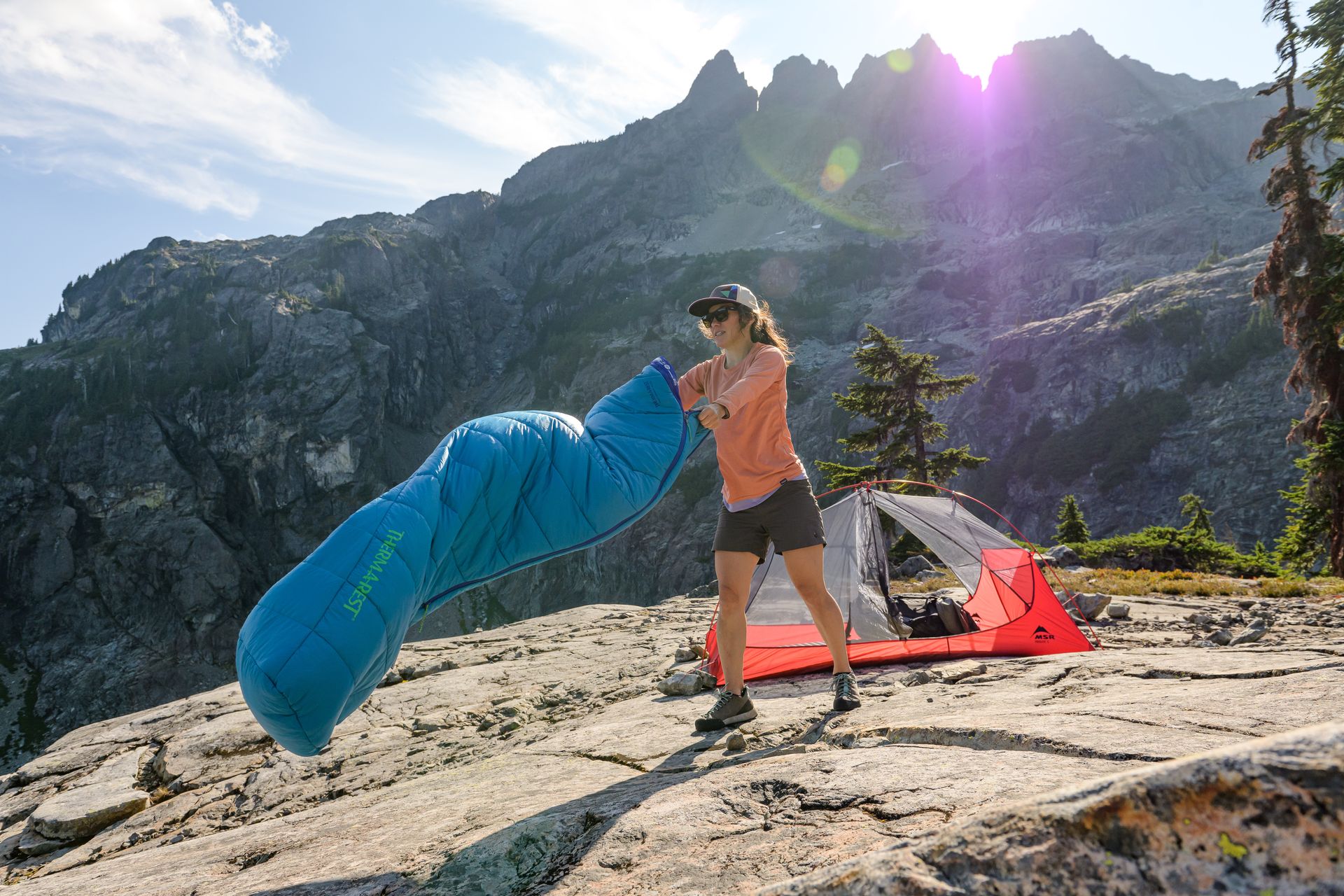
Your backpacking sleeping pad matters more for warmth and comfort than most people expect — a warm sleeping bag on a thin pad still sleeps cold, because the down under you is crushed flat. Here's how we think about picking the right pad for the trips you actually take.
Start with the three types
Air pads are the lightest and most comfortable per ounce. Our NeoAir pads use internal baffles and reflective ThermaCapture layers to stop heat loss, so the XLite NXT weighs 13 ounces in Regular, packs to the size of a 1-liter bottle and still carries a 4.5 R-value. The trade-off is that any air pad can puncture, so a small repair kit belongs in your first-aid bag.
Self-inflating pads like our Trail Pro and Trail ProLite combine open-cell foam with air. Open the valve and the foam expands on its own; add a breath or two for firmness. They're quieter and more stable than air pads, a bit heavier and a bit bulkier.
Closed-cell foam pads like the Z Lite SOL and Z Lite Original are simple accordion pads. They weigh around 14 ounces, can't puncture, and double as a sit pad. Many ultralight backpackers carry one alone in summer, and many winter campers put one under an air pad for extra insulation.
Understand R-value
What R-value do I need?
R-value measures how well a pad resists heat flowing from your body into the ground. Since 2020 the industry has used the ASTM F3340 standard, so numbers are comparable between brands. Higher is warmer, and R-values add up when you stack pads.
For warm summer nights, an R-value of 2 to 3 is plenty. For three-season backpacking with frosty mornings, look for 3.5 to 5 — the XLite NXT's 4.5 covers most trips. For snow camping, choose 5.5 or more; the NeoAir XTherm NXT carries a 7.3 R-value and is our winter pad.
Weigh weight against comfort
How heavy should a backpacking sleeping pad be?
Most backpacking pads weigh between 12 ounces and 2 pounds. Thru-hikers and fastpackers usually aim for under a pound; weekend backpackers often happily carry 20 to 30 ounces for a thicker pad. The NeoLoft is a good example of the comfort end: 4.6 inches of loft with side rails at 30 ounces in Regular Wide.
Packed size matters too. An air pad that rolls up like a water bottle leaves room in a small pack; a foam pad lives strapped outside.
Side sleepers and restless sleepers
What type of sleeping pad works best for side sleepers?
Side sleepers put their weight on a small area of hip and shoulder, so thickness and support count. Look for at least three inches of loft and a stable internal structure — our NeoAir pads, Trail Pro and NeoLoft all fit. If you turn a lot, a rectangular shape like the XLite NXT MAX or Trail Pro MAX keeps elbows and knees on the pad.
Size your pad
How should I size my sleeping pad?
Regular pads are 20 x 72 inches and fit most people up to about six feet. Large and Regular Wide sizes add width — usually 25 inches — and Large adds length to 77 inches. Wider pads feel noticeably more stable, especially in a quilt.
Care and storage
How do I store my sleeping pad?
Store pads flat or loosely rolled with the valve open, in a closet rather than the stuff sack. Clean them with mild soap and water, and dry them fully before storage. With care and an occasional patch, a good pad lasts many years of nights under the stars.
